English
 Deutsch
 español
 العربية
 中文
中文
A pallet of consumer electronics shows up at a retailer distribution center in Hamburg. Cartons intact, product fine, paperwork clean. Receiving rejects the whole shipment. Not the product. The tape. BOPP-sealed corrugated boxes now fall outside the take-back agreement that retailer signed eighteen months ago, because mixed-material packaging requiring manual separation at the sorting stage is no longer accepted at that facility. The truck turns around. Return freight, restocking labor, three weeks of shelf time gone. None of that hits the packaging budget. It hits the P&L.
This is not a sustainability story. This is a contract enforcement story, and the contracts are multiplying.
The regulatory mechanics are straightforward once you see them. A corrugated carton is a mono-material paper product. It enters the recycling stream, gets pulped, re-enters the fiber cycle. Clean loop. A corrugated carton sealed with BOPP tape is no longer mono-material. The polypropylene film does not pulp. The synthetic adhesive does not pulp. The recycling facility either pays someone to peel the tape off, which is labor cost, or rejects the bale, which is disposal cost. Either way, the carton that was supposed to close the loop has become a contamination event.
Under the EU Packaging and Packaging Waste Regulation, that contamination event has a price tag. EPR fee modulations are now tied to design-for-recycling criteria. Packaging that fails the mono-material threshold pays a higher per-unit fee. At low volume, the difference is rounding error. At the volume a mid-size e-commerce operation ships into European markets, the annual fee delta between plastic-tape-sealed and paper-tape-sealed cartons is a number that shows up in a quarterly finance review. The UK, several US states, and an expanding list of jurisdictions are building equivalent fee structures. The direction is consistent. The timeline is not negotiable.
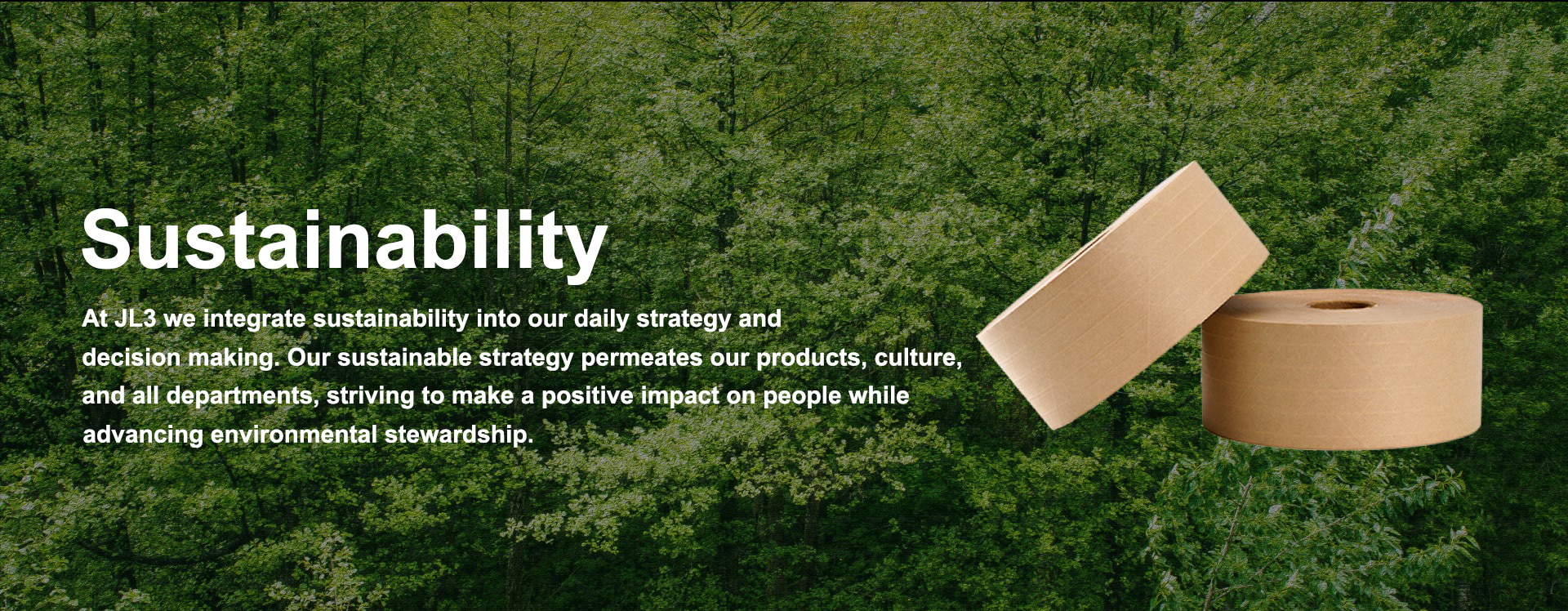
Water activated tape removes the problem at the material level, not at the process level. The backing is kraft paper. The adhesive is starch-based. The reinforcement, where present, is yarn embedded within the paper structure. The entire tape assembly enters the pulping process with the carton. No separation step. No contamination. No fee modulation. From the recycling facility's perspective, the carton is still a mono-material paper product. The tape is not an exception to be managed. It is part of the fiber stream.
That is the core compliance argument, and it is not a marketing claim. It is a material classification. The carton either is or is not mono-material, and the tape on the seal determines which one it is.
The tamper evidence question operates through a different compliance channel, but it is equally binding. Pharmaceutical distribution under the FDA Drug Supply Chain Security Act, medical device shipping under the EU Medical Device Regulation, high-value electronics logistics under retailer vendor agreements, all specify tamper-evident closure as a contractual condition. Not a recommendation. A condition.
A pressure-sensitive tape seal can be heated, lifted, and re-applied with minimal trace. The evidence of interference is ambiguous, which means the audit trail is ambiguous, which means the compliance documentation is ambiguous. A WAT seal is destructive by nature. The starch adhesive bonds into the corrugated fiber. Opening the carton tears the board. The tamper evidence is the carton itself. No secondary indicator. No void label. No inspection protocol beyond looking at the box. For a pharmaceutical distributor standing in front of a regulator during an audit, that destructive bond is not a packaging preference. It is the compliance mechanism.
The JL product line addresses the compliance vectors separately, and this matters because different markets and different contracts penalize different things.
The standard reinforced WAT range, from the light-duty JLN-3140 class through the heavy-duty KN-37120, uses fiberglass yarn reinforcement. The tamper-evident and mono-material properties are identical across the range. The reinforcement density determines whether the seal survives the transport load. The starch bond determines whether the seal survives a person with a knife. Those are two different problems, and the compliance requirement is the second one.
For operations where the contract or the market specification requires removal of fiberglass from the waste stream entirely, the plant-based yarn variants exist for that reason. JLN-3150E covers light-duty parcels. KN-31120E and KN-37120E cover medium and heavy loads. The catalog marks these as 100 percent degradable. The fiber, the yarn, and the starch adhesive all break down in the pulping and composting process without residual contamination. For a brand shipping into a market where compostable packaging certification is a retail vendor agreement checkbox, this is not a sustainability narrative for the annual report. It is a contractual checkbox.
The recycled kraft backing options address a third compliance vector. JLN-3150R and KN-37120R use 100 percent recycled paper on both plies. Several EPR schemes and retailer packaging specifications now include minimum recycled content requirements for paper-based packaging components. A virgin-fiber tape on a recycled-content carton creates a documentation gap. A recycled-backing tape closes it. The starch bonding mechanism does not differentiate between virgin and recycled cellulose. The adhesion performance is the same. What changes is the compliance paperwork, and in this regulatory environment, the paperwork is the product.
Where the compliance pressure has not yet arrived, and this needs saying plainly, WAT is not automatically the right call. A domestic operation shipping non-regulated products within a single jurisdiction, with no retailer packaging mandate and no EPR fee exposure, does not have a compliance problem that WAT solves. The switch in that case is a performance decision or a cost decision, not a regulatory one. The tape on the carton is a consumable, and the cheapest consumable that does the job is the right consumable.
But the list of operations where that is still true is getting shorter every year. EPR schemes are expanding geographically and tightening financially. Retailer packaging specifications are ratcheting down. The EU timeline is not a suggestion, and the penalty structure is not a negotiation. If your operation ships into any market where packaging recyclability is now a contractual or regulatory line item, the question is not whether to switch. The question is whether you switch on your own schedule, with a planned line conversion and a tested tape specification, or on the schedule that a rejected pallet in Hamburg imposes on you at three in the afternoon on a Friday.




 Red IPv6 compatible